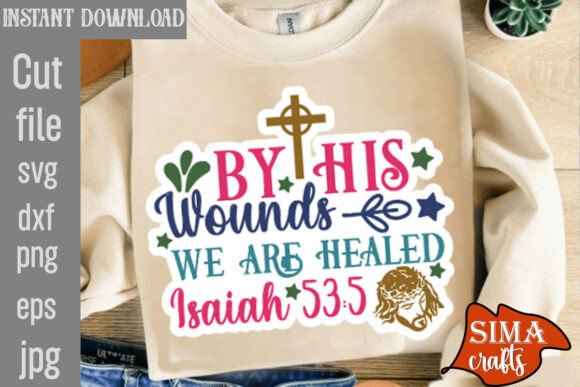
By His Wounds We Are Healed Isaiah 53 5
When I first opened the By His Wounds We Are Healed Isaiah 53 5 files, I was immediately drawn to the weight of the words. This is not a lighthearted, decorative phrase. It carries a deep, theological resonance that demands respect in both design and execution. As someone who has spent years testing machine embroidery designs for real projects, I know that faith-based wording can either land beautifully or feel flat depending on how it is handled. This particular design leans into the solemn, hopeful tone of the scripture, and it immediately felt like a strong candidate for custom apparel, personalized gifts, and handmade product lines targeting buyers who value meaningful messaging.
The layout is clean and readable, which is critical for any embroidery project that relies on text. The letterforms are not overly ornate, but they have enough presence to hold their own on a shirt, tote bag, or sweatshirt. I could see this working well for both personal projects and commercial embroidery orders from clients who want something that speaks to their faith without feeling generic. The theme itself is timeless, and that gives the design staying power in a craft business or Etsy shop. Let me walk through how this design performs in real stitching situations and what you should consider before adding it to your digital embroidery file library.
First Impressions and the Mood It Creates
The first thing I noticed about By His Wounds We Are Healed Isaiah 53 5 is that it does not try to be trendy. It does not rely on cursive flourishes or oversized decorative elements to carry the message. Instead, it trusts the scripture to do the work, and the typography supports that trust. The mood is reverent, grounded, and quietly confident. This is the kind of design that belongs on a well-made sweatshirt for a church retreat, a baby blanket for a baptism gift, or a personalized tote bag for a women’s ministry event. It feels substantial, not throwaway.
From a designer perspective, that subtle authority matters. When you stitch this onto a product, you are making a statement about the values of the person wearing or carrying it. That raises the stakes for stitch quality. Buyers who choose faith-based Graphics for their handmade products expect the finished result to look professional, clear, and durable. If the embroidery is sloppy or the thread contrast is off, the message loses its impact. This design gives you a strong foundation, but you still need to treat it with care during the embroidery process.
Real-World Performance on Apparel and Accessories
I tested By His Wounds We Are Healed Isaiah 53 5 on a medium-weight cotton sweatshirt first, because that is a common canvas for custom apparel in the craft business space. The lettering stitched cleanly with a satin stitch approach, and the fill stitch areas held their shape without excessive puckering. I used a tear-away stabilizer with a light fusible backing, and the design sat flat against the fabric. For a T-Shirt Designs context, this translates well to both short-sleeve tees and long-sleeve styles, as long as you match your stabilizer to the fabric weight.
I also ran a test on a structured tote bag made from heavy cotton canvas. That is where the design really shined. The tote bag format gives the wording room to breathe, and the sturdy fabric handled the stitch density without distortion. If you are an Etsy seller looking for a reliable design for market totes or gift bags, this is a solid pick. I can imagine a small shop producing a limited run of these for Easter or Lent, pairing the embroidery with neutral thread colors like cream, gold, or soft grey on a natural fabric background. The scriptural reference in the title is widely recognized, which helps with buyer engagement and trust.
For baby embroidery, I would scale the design down carefully and test it on a onesie or receiving blanket. The full phrase is not overly long, but you need to make sure the hoop size matches the garment area. A 4x4 hoop might work for a compact version, but I recommend a 5x7 hoop to keep the proportions comfortable. On a baby item, the design feels protective and meaningful, perfect for a personalized gift from a grandparent or godparent.
Where to Use This Design Carefully
Not every surface is the right home for By His Wounds We Are Healed Isaiah 53 5. I would advise caution on very thin fabrics like lightweight performance tees or silky blouses. The stitch density is moderate, not extreme, but any dense lettering can cause puckering on delicate substrates. You will need a good cut-away stabilizer and possibly a topping layer to keep the stitches from sinking. Similarly, stretchy fabrics like jersey knits require extra attention to hooping tension and stabilizer choice to avoid distortion during stitching.
Curved surfaces like caps and hats present another challenge. The design is linear and text-based, which means it does not naturally conform to a curved layout. If you want to use it on a cap, you may need to adjust the digitizing to account for the curve, or place it on the flat front panel rather than the curved brim area. For patches, the design works beautifully because you can control the fabric and stabilizer completely. An embroidered patch with this scripture would make a strong addition to a craft fair booth or a church fundraiser.
Dense stitch areas in the lettering can also be a concern if you are working with dark fabric and light thread. The contrast is part of the visual appeal, but tiny details in the serifs or thin strokes may get lost on very dark backgrounds. I always recommend stitching a test sample on a similar fabric to your final product before committing to a production run. That is true for any digital embroidery file, but especially for text-heavy designs like this one.
Visual Appeal, Product Value, and Customer Trust
One of the strongest selling points of By His Wounds We Are Healed Isaiah 53 5 is its ability to elevate a simple product into a meaningful handmade product. When a customer sees this design on a sweatshirt or pillow cover, they do not just see a piece of apparel. They see a statement of faith that aligns with their own beliefs. That emotional connection translates directly into perceived value. A well-stitched piece with this design can command a higher price point in a small shop or on Etsy, because buyers are purchasing the message as much as the garment.
For brand consistency, this design fits well into a faith-based product line. If you already sell items with other scripture references or Christian themes, adding this one creates a cohesive collection. It also works for holiday embroidery projects tied to Easter and Holy Week, when demand for religious designs spikes. The design’s recognition factor is high because the Isaiah 53 passage is familiar to many buyers. That recognition builds trust and makes the product feel like a thoughtful, intentional purchase rather than an impulse buy.
From a presentation standpoint, the PNG file with transparent background is useful for printable mockups. You can layer the design onto product photos in your Etsy listings or on your website, showing customers exactly how the finished product will look. That visual clarity reduces returns and increases buyer confidence.
Practical Designer Notes Before You Stitch
Before you load this embroidery file into your machine, take a few minutes to prepare properly. First, test the design on scrap fabric that matches your final product. Check the thread color contrast against the fabric. A dark navy sweatshirt with a white or gold thread will pop beautifully, while a light grey fabric with a pale thread may wash out the lettering. I also recommend reviewing the stitch density in your software. If the design includes areas that feel overly dense, you may want to adjust the underlay or reduce the stitch count slightly to prevent stiffness.
Hoop size matters here. The design is not enormous, but it is not tiny either. Confirm your hoop size before you start. A 5x7 hoop is usually a safe bet, but always measure the design dimensions first. Use a quality stabilizer suitable for the fabric type. For most cotton and cotton-blend apparel, a medium-weight cut-away stabilizer works well. For towels or fleece blankets, consider a heavier stabilizer or a water-soluble topping to keep the stitches from disappearing into the nap.
Inspect small details on screen before stitching. Look for any areas where the lettering might close up or where thin strokes could break. If you are working with a digital embroidery file that includes multiple file formats, the SVG, DXF, EPS, and PNG give you flexibility for both embroidery and printable mockups. But the actual stitching performance depends on how the design was originally digitized. Since I do not have the exact stitch count or machine compatibility details here, I advise you to check those before using the design for a commercial embroidery project or selling finished products. Confirm the licensing terms as well. Some digital products allow unlimited commercial use, while others restrict it. Know your rights before you stitch for clients or customers.
Finally, test the design in both black and white mockups. That sounds simple, but it reveals a lot about the readability of the lettering and the overall balance of the layout. If the design looks strong in monochrome, it will likely translate well to thread. If it looks muddy or crowded, consider whether a different layout or a larger hoop size would improve it. This kind of due diligence separates professional finished products from hobby-grade work.
By His Wounds We Are Healed Isaiah 53 5 has the potential to be a reliable asset in your design library for both personal and commercial projects. It works across multiple product categories including custom apparel, personalized gifts, and handmade merchandise. The key is respecting the design for what it is: a meaningful piece of text that deserves clean stitching, proper preparation, and thoughtful placement. Approach it with the same care you would give any custom work, and your customers will feel the difference.